
The present financial world is really like a true minefield for your wallet. The establishment of regular savings habits is the ultimate basis for future financial stability and independence. But increasing living costs, hidden fees on your account, and the temptation to buy something right now pose a number of obstacles for an ordinary consumer.
Without a proper plan, your money gets lost. This guide is all about the best banking tips to optimize your accounts and save more with minimal effort. Follow our professional advice to reach your financial goals easily.
Understanding Your Banking Options
In order to start saving, it is essential to understand that your financial institution defines how fast you can grow your money. Where you decide to keep your capital is as important as your ability to save a certain amount each week.
How to choose the Right Bank
To find the right place for your money, you need to assess three basic parameters: fees, interest rates, and convenience. Many traditional consumers lose hundreds of dollars annually by staying with the institution whose policies are outdated.
- Compare Fees, Interest Rates, and Services: You always need to read the fine print. Mind monthly savings fees, out-of-network ATM fees, and paper statement fees. Even a small monthly fee of ten dollars may slowly destroy your efforts for the future.
- Local Banks vs. Online Banks: Traditional local banks give you the opportunity to visit a branch office and speak to a consultant in person. But online banks don’t have expenses for maintaining physical premises. That’s why they usually offer lower fees and way better interest rates on savings accounts.
In today’s environment, choosing the right banks is essential to making the most of your online banking, saving money, and paying the fewest costs. That is where a Finance Nest blog comes in. This brand is an educational platform that can teach you effective and practical methods of saving money and help you find the right bank.
Finding the Right Account
You won’t be able to optimize your financial flow if you are managing your money under an inappropriate account structure. You need to separate different financial tasks between the specific account types.
Checking vs. Savings Account for Saving
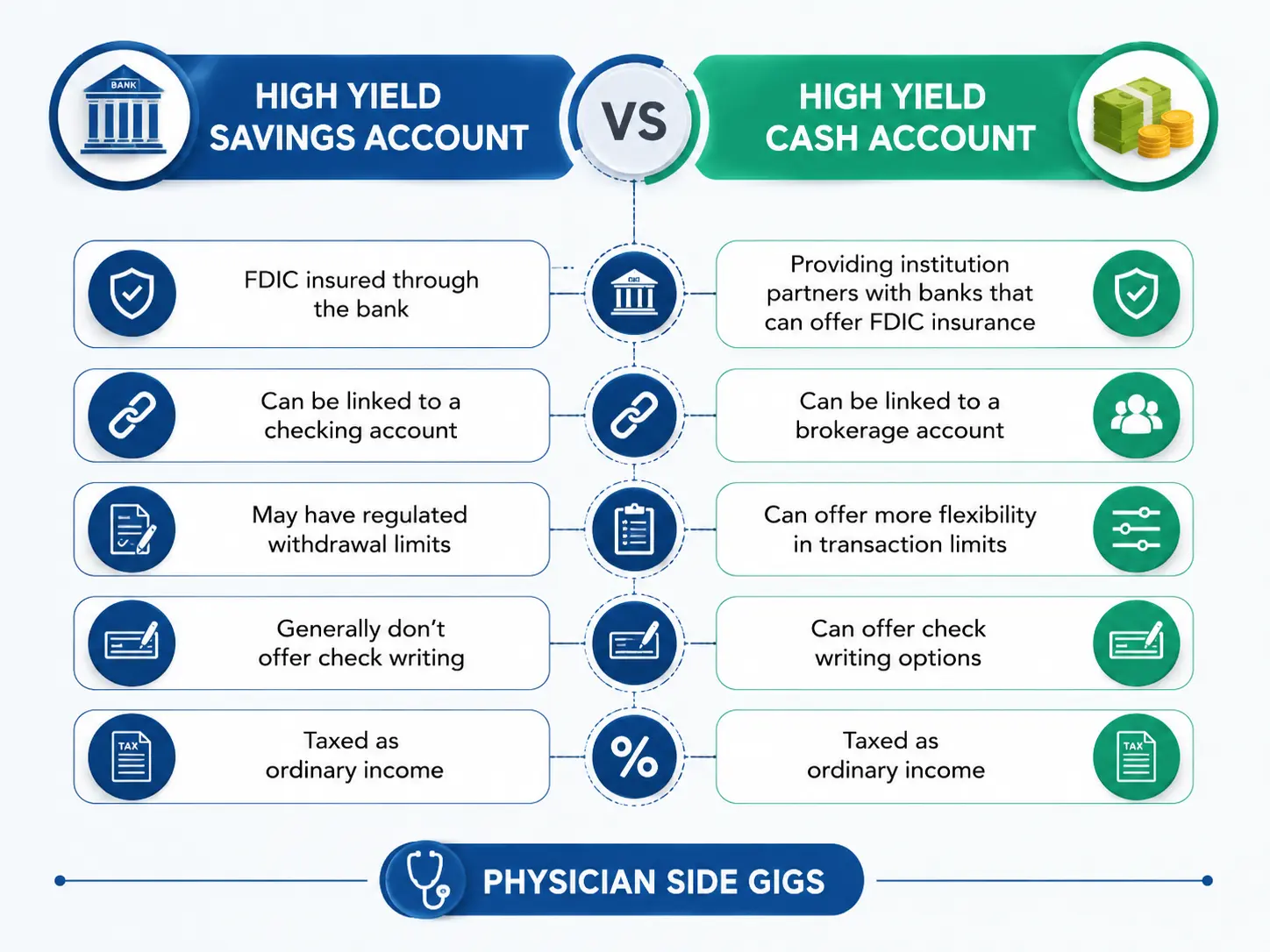
It is important to understand the difference between a checking and a savings account structure for efficient everyday savings.
Checking Account (Transaction Hub):
This type of account is created for your daily spending. It comes with a debit card, check-writing, and unlimited transaction limits. However, it doesn’t give you any interest. So all your additional money stored here becomes subject to inflation.
Savings Account (Vault):
This type of account is created to store your reserves. It gives you interest and automatically separates from your daily spending card, which is a good psychological barrier for shopping addiction.
Remember, a right bank will offer you the whole thing like a banking advise and help you protect your money.
Benefits of High-Yield Savings Accounts
If you are still saving money in a traditional savings account at a legacy bank, the interest rate you are getting is probably really low. In most cases, it is around 0.01%.
However, if you change to a High-Yield Savings Account (HYSA), you will get much higher interest rates.
Practical Scenario:
In case you have an emergency fund worth $10,000 in a regular savings account with a 0.01% interest rate, you’d make $1 in interest at the end of the year. But if you put this same amount into an online HYSA with the rate of 4.50%, you will earn $450 during the same period of time – absolutely risk-free and FDIC-insured.
Banking Tips to Save More Money
You can optimize your daily finances without putting too much effort. With the help of some structural changes to your accounts and modern technology, you’ll be able to automate your savings.
In the next section, I will explore the best banking tips.
Set Up Automatic Bank Transfers
The best way to save is to exclude the human factor altogether. When you rely on your own willpower to move the remaining amount of money at the end of the month, you will often find no such money.
- Pay Yourself First: You need to set up an automatic transfer from your online bank portal that moves the specified percentage of your paycheck (e.g., 10% or 20%) to your savings account on the same day when your direct deposit arrives. Thus, you’ll provide funding for your goals even before the chance to spend this money arises.
Best Apps for Spending Insights
If you want to reduce unnecessary cash leakage, you need to understand where your money is going. There are many modern banking applications that offer you automated insights on your spending habits in real-time. Also, offer you some good banking advice.
To track every swipe, tap, and online purchase manually is quite hard work. Most of us start with the spreadsheet with the best intentions, but quit it in a few weeks because of the tiring routine. And that’s when modern financial trackers appear.
They work like a real-time digital reflection of your economic habits. Instead of guessing where your money was spent at the end of the month, these platforms analyze your transactions from your connected accounts via machine learning and immediately separate them into understandable visual groups.
Top Apps for Spending Insights in 2026
If you want to get the maximum from your spending insights, you need an application that suits your goals and family size. Here’s what the leading platforms on the market offer.
- Empower (Net Worth Tracker): If your main task is to track your daily money flow and investment growth in one place, Empower is a really powerful platform. It combines your credit cards, mortgage, checking accounts, and retirement portfolio. This free service is great for people who want a high-level overview of their finances.
- Monarch Money (Budgeting Utility): If you want a clean and ad-free platform to manage money together with your spouse, Monarch Money is a great paid tool for you. It allows multiple users to collaborate on one household dashboard without revealing bank login credentials. Highly customizable rules make it easy to adjust manually.
- Copilot or Rocket Money (Vampire Subscription Tracer): If your main leaks are ‘vampire subscriptions’ – automatic payments for services you completely forgot about (streaming apps, software or gym membership), these utilities are for you. They detect price hikes, recurring bills, and calculate your expenses for your current lifestyle every month.
How to Turn Insights Into Action
The download of an application won’t automatically improve your finances. You need to use information to grow your savings. The most efficient method is to perform a Sunday 10-Minute Audit.
Once a week, you need to open your tracking dashboard and review all uncategorized transactions and your spending progress bars. For example, if you already spent 80% of your allowance for dining out on Thursday, you can consciously decide to prepare meals over the weekend. Thus, your regular low-effort check will eliminate the shock of your empty checking account at the end of the month.
How to Save Money Fast
If you need to accomplish some urgent financial goal or replenish your depleted emergency fund, you may need to perform some urgent actions to optimize your money flow.
Here are the key tips and methods to save money.
Phase 1: Start a 30-Day Spending Fast
To get fast results, you need to reduce your expenses significantly. You have to temporarily cutting down your spending allows you to allocate significant amounts directly to savings.
- Stop Non-Essential Services: First of all, stop using streaming services, cancel gym membership, and cancel any expensive application subscriptions.
- Eat In: Commit to cooking meals at home based only on food supplies you already have.
- Implement the 48-hour Rule: When it comes to buying something that is not essential, make yourself wait for 48 hours before making the purchase. Surprisingly, in more than 70% of cases, the desire to make that purchase fades.
Phase 2: Score Immediate Savings on Your Regular Bills
The surprising thing about the bills you pay each month is that there are hidden sources for immediate savings. A few phone calls can make you lock those savings in.
- Negotiate Utility and Telecom Bills: Contact your service provider (internet, cable, phone). Let him know that you checked competitor prices.
- Review Your Insurance Policies: Do research for cheaper alternatives to car and renters’ insurance.
- Shift High-Interest Credit Card Balances: Lastly, transfer all high-interest credit card balances to a new card without interest for several months.
Get a Zero Percent Balance Transfer Card
If you are bothered by credit card debt that takes a lot of your income each month, it becomes impossible to save money. One of the most efficient solutions is to use a zero percent balance transfer credit card.
How it works: Many financial institutions offer you 12 to 21 months with 0% APR on transferred balance. By transferring your debt to the card with a promotion, every dollar you spend will go toward paying off the principal balance instead of paying off the interest.
Note: Remember to pay off the whole balance before the end of the promotional period to avoid the deferred interest rate.
FAQs
- What are the best banking tips for absolute beginners?The most effective step a beginner can take is to set up automatic bank transfers and open a high-yield savings account. This approach will allow you to accumulate money regularly and to have a good yield on your savings.
- Is an online bank actually safe to use?Sure, only if the online banking site is FDIC insured. FDIC insurance covers deposits up to $250,000 for each depositor and each bank. That makes an online bank as safe as any other.
- How much money should I have in my checking vs. savings account?Your checking account should contain enough money to cover your monthly savings and a buffer to avoid accidental overdrafts. All other money should be deposited either to the high-yield savings account or the investment account.
- How can I avoid monthly bank maintenance fees?You can easily avoid these fees by choosing an online bank with a fee-free structure, by keeping the bank's required minimum daily balance, or by establishing a recurring monthly direct deposit from your employer.