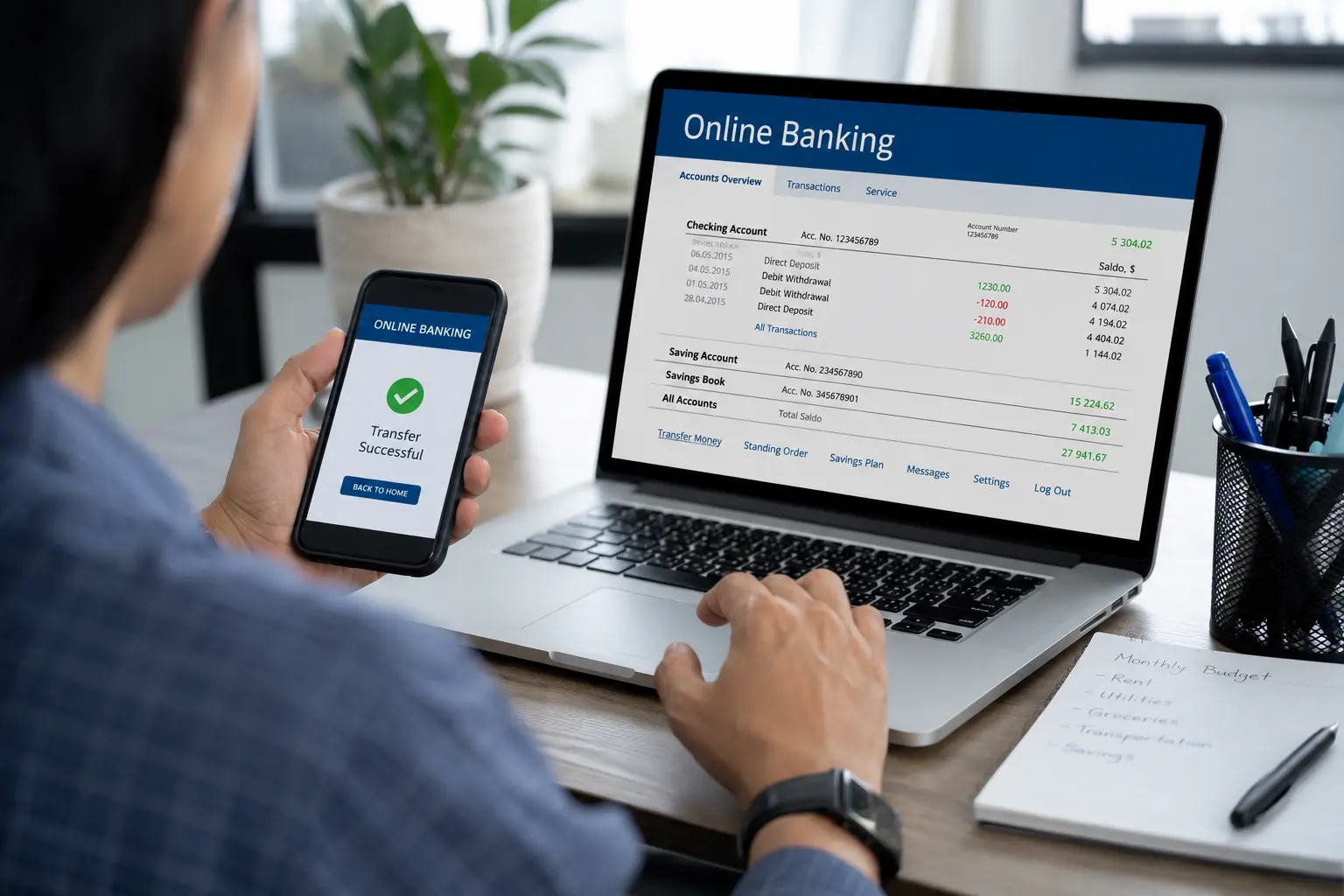
Many people feel their bank accounts are safe places to save their wealth. There is a pricey secret hidden in this passivity. And with low mortgage rates and hidden maintenance fees, you have an invisible leak gradually eating away at your capital.
With normal inflation rates, the average consumer loses around $ 2,500 $ in purchasing power in just 10 years for every $ 10,000 $ they leave in a traditional basic savings account.
You must understand how to implement proactive cash flow methods to escape this wealth-draining trap. In this easy to follow education guide, you will learn how to make your Smart Banking Decisions by choosing better banks.
Understanding How to Build Wealth
What is Wealth building?
Building wealth is not about winning the lottery or getting lucky in highly speculative markets. It is a conscious, methodical process of asset building, debt reduction, and growth in the cash flow created by your primary income over time.
It is not how much you earn that makes you rich; it is how long your net worth can keep your lifestyle going without having to work. It involves turning active income into passive streams that continuously beat inflation.
The Importance of a Solid Financial Foundation
If you are going to be an aggressive investor or high-risk trader, you need to lock down your basic core first. When you have a strong financial foundation, you wont have to sell assets at a loss or take on high-interest debt when events pop up unexpectedly, like a medical emergency or a job loss.
The foundation that shields your long-term intentions is stabilizing your main checking and savings structures. Making Smart Banking Decisions is the first Brick of this Protective Barrier, which finally paves the way for your Future Financial prosperity.
Common Misconceptions about wealth
People sometimes think that you have to be really thrifty, uncomfortable, or have a really high starting wage to acquire wealth. In fact, regular wage earners can amass a great deal of wealth merely by structuring their banking methods properly and automating their financial flow.
Another popular myth is that it is safe to keep your money in a regular checking account. Static currency does not just stagnate; it actively loses value, as seen by inflation. Extreme risk-aversion can ironically become a source of capital decay.
Are ETFs safer than stocks?
Yes, Exchange Traded Funds (ETFs) are considerably safer than individual stocks in general because of the power of diversity. When you put your money into one stock, your money is related to how well one company does. If that company goes bankrupt, you could lose all your money. An ETF, on the other hand, bundles hundreds of equities into one asset. If one firm goes bankrupt, it has little impact on your whole portfolio.
How to choose between Stocks and ETFs
Which one is right for you depends on your time availability and your risk tolerance. If you like reading quarterly earnings reports, parsing complex business balance sheets and can stomach high volatility, choosing individual stocks can produce market-beating returns. But if you want a passive, hands-off approach to consistent, reliable average market compounding, broad-market index ETFs are your best bet.
How to make savings for Emergencies Automatically
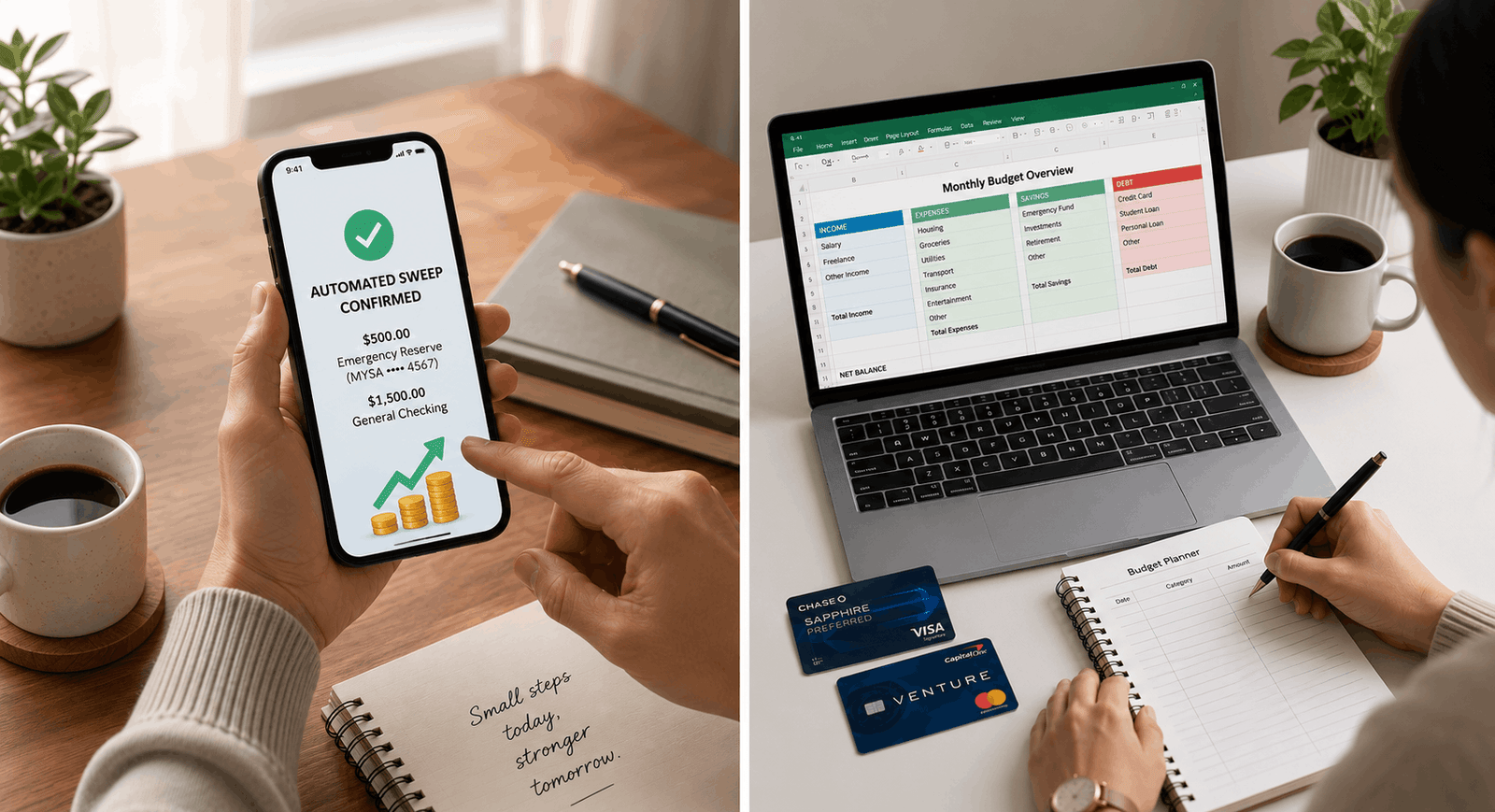
One of the best methods to establish security is to completely remove human motivation from your savings habit. With every monthly salary you receive, your bank should do this for you automatically. They should allocate the money you earn before you spend it.
Set up an automated recurring transfer from your paycheck, so you have a steady baseline for your emergency fund.
This strategy, commonly referred to as paying yourself first, ensures that your emergency savings develop incrementally in the background while you focus on day-to-day activities.
[Monthly Salary Direct Deposit]
│ [ Checking Account ] [ Automated Sweep ] (Daily Lifestyle Spending) (Emergency Reserve HYSA)
What is a High-Yield Savings Account and how does it work?
A High-Yield Savings Account (HYSA) is a specific type of savings account that is offered mostly by newer internet banks that offer a much greater interest rate than traditional brick-and-mortar banks.
On average, typical savings accounts pay a paltry $0.01\%$ interest, while a competitive HYSA can give an annual percentage yield (APY) of more than $4.00\%$.
These accounts work by operating digitally with no overhead in physical form, so online institutions may pass their operational savings directly to you in the shape of higher interest rates.
By using sophisticated Banking decisions and strategies like transferring your principal cash reserves to a HYSA, your emergency funds will continue to grow with inflation and stay completely liquid and safe with Federal Deposit Insurance Corporation (FDIC) insurance.
How to Create a Budget and Track Expenses
The first step in creating a working budget is to look over the past three months of your credit card and banking statements to get a realistic baseline of how much money you spend each month. These transactions then need to be broken down into non-negotiable desires ( housing , minimum loan payments , etc . ) and negotiable wants ( eating out , entertainment , etc . ) .
Structured and smart banking decisions and banking methods, such as the $50/30/20$ rule, offer flexible spending parameters, not hard constraints. The administrative control to optimize your monthly savings surplus may be obtained by keeping a regular eye on your spending with the use of digital checkbooks or spreadsheets, in which you can find hidden leaks.
If you want to learn step by step create a successful budget, consult the Finance Nest Blog. The brand owns a team of the best financial advisors and tutors. Just go and connect with them.
Best Student Checking accounts with no fees
It is important for young adults and students to stay on the right financial path, and avoiding administrative fees is vital. Fortunately, many top institutions offer student-specific checking accounts that waive monthly maintenance costs, minimum balance limitations, and out-of-network ATM surcharges.
- Chase College Checking: Fee-free checking for college students for up to five years, including a great mobile app and access to a huge national branch and ATM network.
- Capital One MONEY Teen: A no-fee account for younger kids and teens with no monthly fees, no minimum balance, and strong parental controls.
- Learn about Cashback Debit: A great online checking account with $1\%$ cash back on up to $\$3,000$ in monthly debit card purchases and no hidden monthly service costs.
Best Travel Rewards and low-interest rate credit cards
Credit cards can also be a great way to optimize your cash flow as long as you pay off your statement balance in full every billing cycle to prevent interest.
Chase Sapphire Preferred:
Well known for its large introductory points, broad list of travel transfer partners, and great travel protection benefits at a very reasonable annual fee.
Capital One Venture One:
A great no-fee travel card that gives a flat $1.25\times$ miles on everyday purchases and a competitive low initial APR rate.
Citi Double Cash:
Best for making the most of your everyday spending, this card provides a flat $2\%$ cash back on all transactions ($1\%$ back when you buy, plus $1\%$ back when you pay) with no annual fee and a competitive APR structure.
Compare Budget Apps and Personal Finance Apps
To maintain consistent financial discipline, it is essential to connect interactive digital tracking platforms to your banking accounts. Management of these systems is a crucial pillar for assuring your Future Financial prosperity.
- YNAB (You Need A Budget). It utilizes the zero-based envelope budgeting approach. It compels you to designate a particular purpose for each dollar, significantly curtailing spontaneous expenditure habits.
- Monarch Money: A very modern, visual platform that syncs all your checking, savings, and investment accounts in real-time and displays personalized net worth trends and progress bars.
- Empower: A powerful free alternative that is heavily focused on managing your financial portfolios, assessing mutual fund costs, and estimating retirement preparation indicators.
Open your Student Checking Account for free
Get started with your finances banking online in less than ten minutes. To open a free student checking account, simply visit the website of your preferred bank and fill out their online enrollment form.
You will require your Social Security Number (SSN), government-issued identification, and proof of student enrollment (such as a school transcript or student ID card).
Once your identity is validated, link a traditional account by ACH transfer to fund your first deposit. And finally, set up your direct deposit so that all future earnings are automatically and fee-free deposited into your new account.
Final Note
Financial independence is not about complicated math or giving up your everyday conveniences.
Sign up for Smart Banking Decisions, automated savings tools, and maximizing your yield rates to preserve your hard-earned assets from inflationary decay.
Stick to your budget goals, track your balances regularly, and let structural cash compounding guarantee your profitable future lifestyle starting today.
FAQs
- What is the main difference between a checking and savings account?Checking accounts are for your everyday transactions, bill payments, and ATM cash withdrawals. They normally generate nearly no interest but provide limitless access. Savings Account: This is to hold your capital. It normally limits the monthly transaction limit but gives interest on your deposits.
- Are internet banks safer than brick-and-mortar institutions?Sure. Your cash deposits are federally insured up to $250,000 per depositor, per institution, if the online institution is insured by the Federal Deposit Insurance Corporation (FDIC) or the National Credit Union Administration (NCUA).
- How much money do I need to retain in my checking account?It is smart to retain between one and two months' worth of living expenditures in your checking account so you can easily pay for recurring payments, automatic sweeps, and daily lifestyle spending, while the rest of your wealth continues to grow in high-yield accounts.
- Does opening a new checking account impact my credit score?Usually not. When you open a basic checking or savings account, it often involves a “soft pull” of your credit report. This will not affect your credit score at all, as opposed to the “hard pull” required for credit cards or loans.