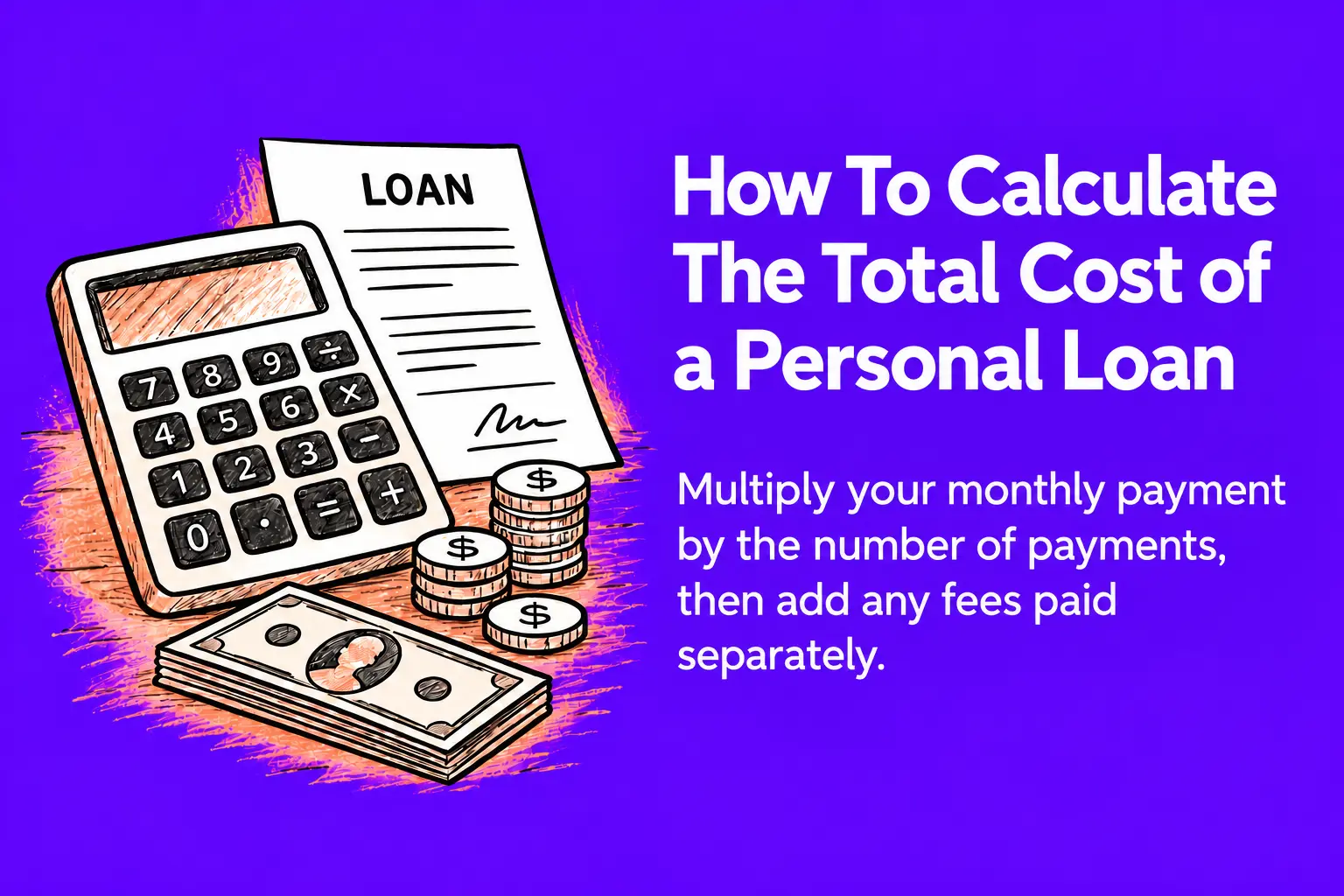
A loan offer shows up with a shiny number. $10,000 borrowed. Monthly payment looks manageable. Feels fine at first glance. But that monthly number hides something bigger. The real cost of that loan often runs far past the amount actually borrowed.
Most people focus on the payment. Can I afford this each month? That’s the wrong question to start with, or at least an incomplete one. The better question is the total cost of a personal loan, the full amount paid back once every fee and every bit of interest gets added in.
This matters more than it seems. Two loans can look almost identical on the surface. Same amount. Same term. But one can cost thousands more than the other, once every number gets tallied up.
Why the Monthly Payment Isn’t the Full Picture
A monthly payment only shows one slice of the deal. It tells you what leaves your account each month. It doesn’t show how much of that goes toward interest versus the actual amount borrowed.
Two loans with the same monthly payment can have very different total costs. A longer term often lowers the monthly number. But it also stretches out interest charges over more months, which usually raises the total paid.
So loan calculation needs more than one number. It needs the full math, spread across the entire life of the loan, not just a single month’s snapshot.
Start With the Principal
Principal is the actual amount borrowed. Nothing added yet. Just the base number the loan starts from.
Say a loan is for $10,000. That’s the principal. Every other cost gets stacked on top of this number. Understanding this baseline matters, since it’s the anchor everything else compares against.
Some loans also roll fees into the principal itself, inflating the amount that interest gets charged on. Always check if fees get added to the loan balance directly, since that quietly increases total cost.
Understand the Interest Rate
Interest is the cost of borrowing money. Simple as that. A percentage charged on the remaining balance, usually calculated annually even when paid monthly.
A lower interest rate generally means a lower total cost, assuming everything else stays equal. But rate alone doesn’t tell the full story either.
- A 6% rate over five years costs less in interest than a 6% rate over seven years
- Rate and term work together, not separately
- Always check whether the rate is fixed or variable, since a variable rate can rise over time
Fixed rates stay the same the entire loan term. Variable rates can shift, sometimes pushing the total cost higher than originally expected.
Factor In the Loan Term
Term is how long the loan lasts. Three years. Five years. Seven years. Longer terms lower the monthly payment. But they usually raise the total interest paid.
This trade-off catches people off guard constantly. A lower monthly payment feels like the better deal. But stretched over more months, interest keeps accruing on a balance that shrinks more slowly.
Compare the same loan amount across a few different terms. The monthly payment drops as the term lengthens. But the total cost of a personal loan usually climbs right alongside it.
Add In the APR, Not Just the Interest Rate
APR stands for annual percentage rate. It includes the interest rate plus most fees, rolled into one combined number. This gives a fuller picture than the interest rate alone.
Two loans with the same interest rate can have very different APRs, depending on fees attached. So always compare APR, not just the advertised interest rate, when checking loan calculation across different offers.
A lower APR usually means a lower total cost, assuming similar terms. This one number does a lot of the comparison work automatically.
Watch for Origination Fees
Many personal loans charge an origination fee. Usually a percentage of the loan amount, taken either upfront or rolled into the balance.
A 3% origination fee on a $10,000 loan adds $300 right away. That either reduces the cash actually received, or gets added to the balance, depending on how the lender structures it.
Check this fee specifically. Some lenders skip it entirely. Others charge several percent, and that difference alone can shift which loan actually costs less overall.
Check for Prepayment Penalties
Some loans charge a fee for paying off the balance early. This seems backward, paying extra for paying less interest overall, but it happens more than people expect.
If early payoff feels likely at some point, this fee matters a lot. It can eat into savings gained from paying ahead of schedule.
Always ask directly whether a prepayment penalty exists. Not every lender charges one, but assuming there isn’t one can lead to an expensive surprise later.
Use a Loan Calculator for the Real Number
Manual math gets messy fast, especially with compounding interest involved. A loan calculator handles this instantly, plugging in principal, rate, and term to spit out the true total cost.
Most calculators show a full breakdown. Total interest paid. Total fees. Grand total owed by the end. This turns an abstract percentage into an actual dollar figure that’s far easier to compare.
Run a few different scenarios through a calculator before committing to anything. Change the term. Change the rate. Watch how the total shifts with each adjustment.
Compare the Total Cost, Not Just the Monthly Payment
This is the core habit worth building. Stop comparing loans by monthly payment alone. Compare the full total cost of a personal loan side by side instead.
- Loan A: $10,000 principal, 7% APR, three-year term
- Loan B: $10,000 principal, 6% APR, five-year term
The second option might have a lower monthly payment. But Loan A, despite a slightly higher rate, could easily end up costing less overall, simply because it runs for fewer months.
Numbers like this only reveal themselves through full loan calculation, not a quick glance at monthly figures.
Factor In Any Extra Charges
Some loans carry small extra charges beyond origination fees. Late payment fees. Insufficient funds fees. Sometimes even a fee for paper statements instead of electronic ones.
None of these individually cost much. But stacked together over a multi-year loan, they can add up to a noticeable chunk of the total.
Read the loan agreement fully before signing. These smaller charges rarely get mentioned upfront in marketing, but they show up clearly in the actual contract terms.
Common Mistakes When Estimating Loan Cost
A few patterns trip people up repeatedly when sizing up a personal loan:
- Comparing loans by monthly payment instead of total cost
- Ignoring fees that get rolled into the loan balance
- Assuming a lower rate always means a lower total cost, regardless of term
- Skipping the fine print on prepayment penalties
None of these mistakes come from being careless exactly. Loan terms just get presented in ways that make quick comparison harder than it should be.
Final Thoughts
Learning how to calculate the total cost of a personal loan isn’t about complex math skills. It’s mostly about knowing which numbers actually matter, and refusing to judge a loan by its monthly payment alone.
Check the APR, not just the rate. Factor in fees and the full loan term. Run the numbers through a calculator before signing anything. And always ask about prepayment penalties before assuming there aren’t any.
At Finance Nest, the goal has always been making loan math feel less like a maze. A shiny monthly payment can hide a much bigger total. A few extra minutes of loan calculation upfront usually saves a lot more than that, over the life of the loan.
FAQs
- What's the difference between principal and total loan cost?Principal is the amount borrowed, while total cost includes principal plus all interest and fees paid over the loan term.
- Why does a longer loan term increase the total cost?A longer term lowers the monthly payment but lets interest accrue over more months, raising the overall amount paid.
- Is APR more useful than the interest rate alone?Yes, APR includes most fees along with the rate, giving a more accurate comparison between loan offers.
- How much can an origination fee add to a loan?It varies by lender, but a few percent of the loan amount can add hundreds of dollars upfront.
- Do all personal loans charge prepayment penalties?No, many don't, but it's worth confirming directly since assuming otherwise can lead to a costly surprise.
- Can two loans with the same amount cost very differently?Yes, differences in rate, term, and fees can make one loan cost thousands more than another.
- Should I compare loans by monthly payment or total cost?Total cost gives a clearer picture, since a lower monthly payment can still mean paying more overall.
- What's the easiest way to calculate a loan's true cost?Using a loan calculator, which factors in principal, rate, and term to show the full amount owed.
- Do fixed or variable rates affect total cost differently?Yes, fixed rates stay the same throughout, while variable rates can rise and increase the total paid.
- What smaller fees are easy to overlook in a loan?Late payment fees, insufficient funds fees, and paper statement fees, which can add up over time.