Building wealth can feel tricky. Sometimes even overwhelming. So one of the most powerful tools for taking control comes down to asset allocation.
Instead of guessing stock market trends, a balanced portfolio puts money to work. At the same time, it limits severe risk. Whether the goal is retirement savings or a future home purchase, a solid asset allocation strategy helps investments line up with real financial goals.
A Quick Fact Worth Knowing
Many portfolio managers point back to a landmark study from years ago. That study found something striking. More than 90% of a portfolio’s long-term return swing actually comes from asset allocation. So stock picking only explains a small slice of the rest.
What Is Asset Allocation?
In simple terms, asset allocation means splitting a total portfolio across different asset classes. Usually stocks, bonds, cash, and real estate.
Instead of putting all capital into one single investment, money gets spread across several assets. Because these classes react to economic events in different ways, a well-built portfolio balances growth with capital protection.
Why Does Asset Allocation Matter?
Portfolio structure matters far more than daily market swings. So building a lasting path to wealth means focusing on the long-term picture, not the noise of any single day.
How Is This Different From Picking Hot Stocks?
Many beginners get pulled into stock picking. Buying low, hoping for a big win on a hot tech stock, or a trending digital asset.
Some investors get lucky chasing stock hype. But that path exposes money to wild swings. And heavy risk tied to just one company.
Three Factors That Shape the Right Split
Deciding how to split a portfolio depends on three linked factors.
1. Time Horizon
How many years will this money stay invested before it’s needed? A long time horizon, 10, even 30 years or more, leaves room to ride out drops and swings. So growth-focused assets like stocks make more sense here.
A short time horizon, around 1 to 3 years, calls for a different plan. Keeping the money safe matters most. So it should stay easy to reach too. High-yield savings accounts or treasuries fit well here.
2. Risk Tolerance
This covers the emotional and money-side ability to handle a portfolio’s ups and downs. So if a 20% market drop would spark panic selling, a calmer mix, with more bonds, usually works better.
3. Expected Returns
Higher returns almost always bring higher risk along with them. So weighing the need for growth against real risk comfort helps reach goals without too much danger on the way.
Asset Allocation Strategy vs. Picking a Single Stock
Stock picking means putting everything into one single business. So if that company suddenly struggles, the whole investment takes a hard hit.
Asset allocation spreads risk across many markets instead. As a result, one company failing barely dents a properly spread-out portfolio.
Practical Steps Toward the Right Allocation
The right split usually depends on life stage, household income, and how soon certain money gets needed. In fact, life stage shapes this more than most people expect.
Comparing Two Investor Profiles
Profile A: Early career, long time horizon
Age 28, saving for retirement roughly 35 years out. Strategy: full growth. Split: 80% stocks, 15% bonds, 5% cash.
Profile B: Near retirement, shorter time horizon
Age 58, retiring in about 5 years. Strategy: wealth protection and steady income. Split: 45% stocks, 45% bonds, 10% cash.
So the gap between these two comes down entirely to time horizon and risk comfort, not luck or market timing.
A Simple Rule for Beginners
Getting started with asset allocation for beginners doesn’t need deep financial theory. Instead, a simple shortcut works well here.
The Rule of 110
Subtract current age from 110 to find a rough stock split. For example, at age 30, 110 minus 30 equals 80. So roughly 80% stocks and 20% bonds fits.
As age goes up, this rule naturally shifts more money toward bonds. This helps protect assets closer to retirement.
Key Asset Classes to Understand
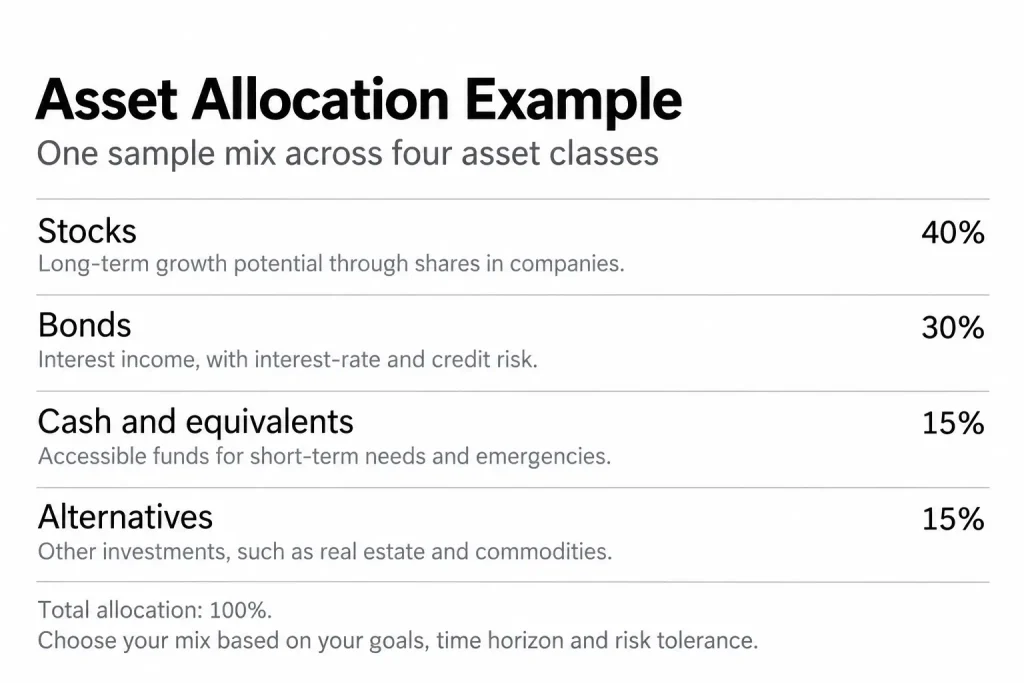
- Stocks (equities): High growth chance, with mid to high risk. Works well for anyone investing over 7+ years for long-term wealth.
- Bonds (fixed income): Lower returns, but steadier income and less market risk. So bonds help smooth out swings through regular interest payments.
- Cash and cash equivalents: Very low risk, and very low return too. Ideal for an emergency fund, or any purchase planned within the next two years.
For anyone wanting to learn investing step by step, the Finance Nest Blog breaks down smart, safe ways to make a first investment. It also covers stocks, ETFs, bonds, and investment basics for newcomers.
How to Build a Portfolio Starting Today
Two main paths exist for handling investments going forward.
1. Hire a Financial Advisor
A complex tax setup, kids to plan an estate for, or running a business can make working with a certified advisor worth it.
So an advisor can build a custom asset allocation strategy around a specific tax bracket. They can also automate rebalancing back to target numbers. And offer steady guidance through rough markets, which helps avoid panic selling at the wrong time.
2. Set Up a Retirement Portfolio
For anyone handling money on their own, with lower costs in mind, retirement accounts offer real tax perks.
- Roth IRA / Traditional IRA: Strong personal options with real tax perks
- 401(k) or 403(b): Worth prioritizing when an employer offers a match, since that’s basically a guaranteed return
- Target-date index funds: Many funds shift allocation on their own as retirement age gets closer
Common Mistakes to Avoid
A few patterns trip up beginners again and again when building an allocation plan:
- Chasing hot stocks instead of sticking to a set plan
- Ignoring time horizon when picking a risk level
- Skipping rebalancing once a portfolio drifts from its target
- Treating asset allocation as a one-time choice instead of something to revisit
Key Takeaways
- Asset allocation drives most of a portfolio’s long-term return, far more than single stock picks ever do
- A solid asset allocation strategy rests on three factors working together: time horizon, risk comfort, and expected returns
- Asset allocation for beginners doesn’t need hard math, a simple rule like 110 minus age gives a fair starting stock split
- Rebalancing now and then keeps a portfolio aligned with its original target, even as markets shift
- Spreading money across stocks, bonds, and cash guards against the risk of any single investment failing
Conclusion
A truly personal asset allocation plan sits at the core of any solid money plan. So spreading investments across stocks, bonds, and real estate, based on risk comfort and goals, limits exposure to market extremes. All while still aiming for healthy growth.
An hour this week is enough to get started. Check existing accounts. Think honestly about risk comfort. And see whether current investments actually match real goals.
FAQs
- What is the difference between asset allocation and diversification?Asset allocation means splitting investments into groups like stocks and bonds. Diversification means spreading holdings out within those groups.
- How often should a portfolio get rebalanced?Once a year works well for most people. Or whenever the split drifts more than 5% from the original target, by selling some winners and buying some laggards.
- What is the best asset allocation for beginners?A simple three-fund setup, covering U.S. stocks, international stocks, and a total bond market fund, makes a solid starting point. So bond share should scale with age and risk comfort.
- Does asset allocation guarantee no losses?No plan removes market risk fully. But a well-built portfolio goes a long way toward cutting it down.
- Should asset allocation change as life circumstances change?Yes. A new job, a major purchase, or a shift closer to retirement often calls for revisiting the original split.
- Is it better to pick individual stocks or use index funds for allocation?Index funds usually fit asset allocation better, since they spread risk automatically instead of relying on one company's performance.
- How many asset classes should a beginner portfolio include?Three usually works well to start: stocks, bonds, and cash. More classes like real estate can get added later as comfort grows.
- What happens if a portfolio never gets rebalanced?Risk tends to drift upward over time, since stocks often grow faster than bonds, leaving a portfolio riskier than originally intended.
- Does age alone decide the right asset allocation?No. Age plays a big role, but risk tolerance and specific financial goals matter just as much in the final decision.
- Can asset allocation work with a small amount of money to invest?Yes. Even small amounts can follow the same principles, since most brokers allow fractional shares and low minimum investments today.