Lets kill one big myth right now: You don’t need a mountain of cash, an education in corporate finance, or a subscription to a high-end stock terminal to start investing.
In reality, today, fractional investing allows you to buy a piece of a share, so you can get started building wealth for the future with as little as five dollars.
While Investing means putting money in stocks, bonds, or index funds to grow. So, Inflation will slowly devalue your cash in a bank account, which is why you must invest.
Moreover, Investing involves beating inflation and building wealth through compound interest. Modern fractional investing lets you buy a tiny share. Start building long-term wealth with $5.
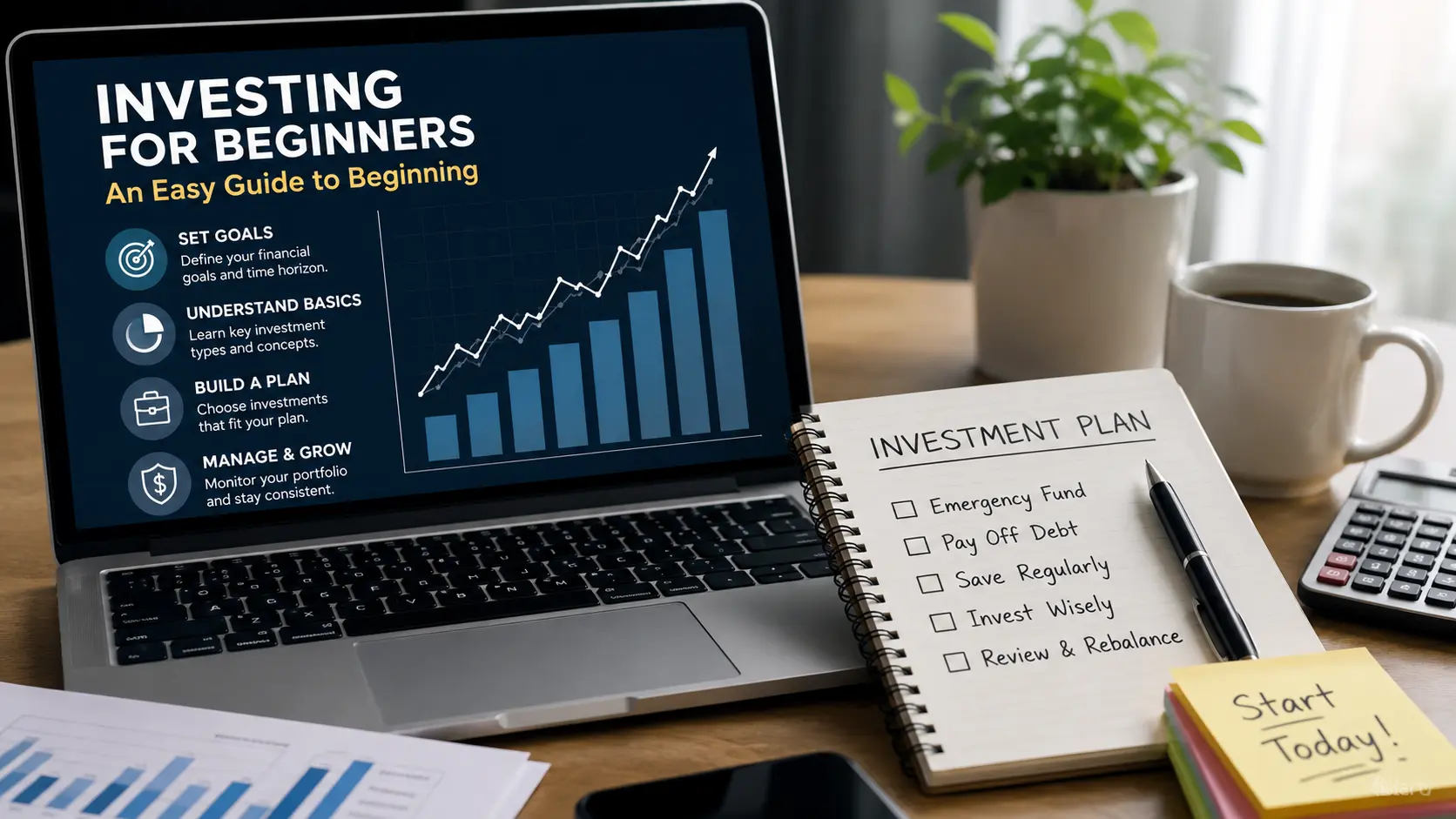
This guide covers investing for beginners with clear, actionable steps for buying your first home, retiring comfortably, or building a passive income engine.
Understanding the Basics: The Core Concepts of Investing
You must understand investment mechanics before risking your money. Remember, every investment portfolio has three pillars beneath Wall Street jargon.
1. The Financial See-Saw: Risk and Return
Risk and return are always linked in investing. Higher gains mean higher volatility.
- Low-Risk Assets: Government bonds or HYSAs are low-risk investments. They provide stability and predictable income, but returns are often below inflation.
- High-Risk Assets: These high-end risks, such as stocks, real estate, cryptos, etc., are high-risk. They can generate life-changing returns, but they also risk temporary or permanent loss.
- The Baseline Rule: Investment timeline determines risk. So, if you need cash in less than three years, prioritise low-risk. You can take on high risk for ten or twenty years if you have time to recover from market downturns.
2. Diversification (Best Safety Net)
Financial diversification is the closest thing to free lunch. It involves diversifying your portfolio across companies, sectors, and asset classes to reduce your financial dependence on one company.
- Single Stock risk: If a big tech company has a product failure or executive scandal, your savings disappear.
- Diversified Solution: Broad funds invest in hundreds of companies (tech, healthcare, energy, retail) at once.
- The Mitigation Effect: If a few fund companies fail, your portfolio wont suffer because hundreds of solid companies carry the weight.
3. Cash Access (liquidity)
Liquidity is the ease of turning an asset into spendable cash without losing value.
- High Liquidity: Savings Account, Cash, or Stock Index Fund Shares. Your bank account will receive the proceeds from selling your shares within one or two business days
- Low-liquidity: Art or Real Estate. You cannot sell 5% of your house for $10,000 in an emergency. As unlocking equity takes months of paperwork, listings, and fees.
- Portfolio Balance: A good starter portfolio always includes cash assets like an emergency fund and longer-term, less liquid investments.
You can take a professional consultation from Fiance Nest Experts. We have a team of specialists and experienced advisors, and we will help you get started in your investment.
The Beginner’s Guide to Successful Investing: A Step-by-Step Roadmap
A successful investment plan does not require single-stock price predictions or hours of market chart analysis. You can automate wealth creation with a systematic process.
Here are the Investing Basics step by step.
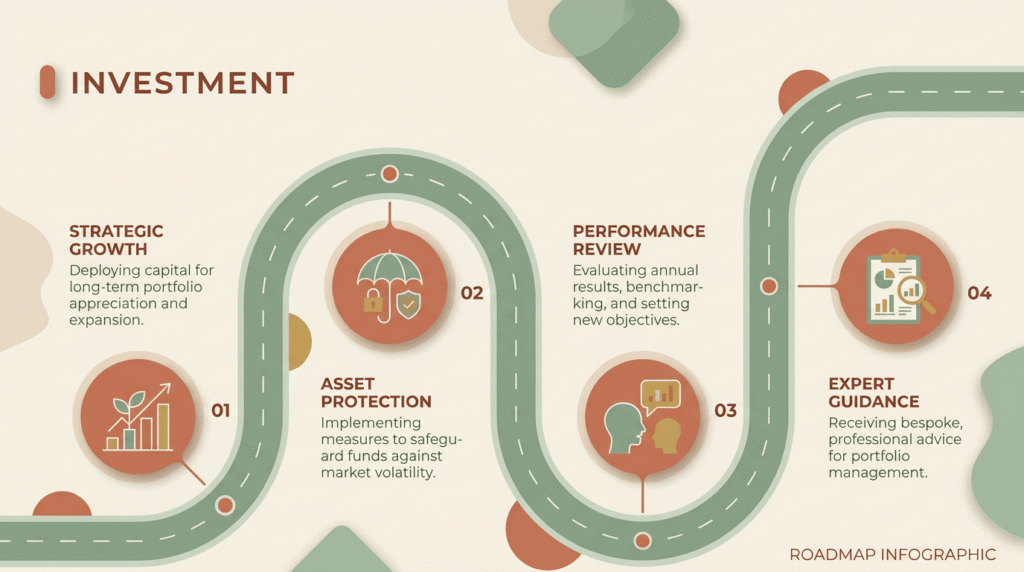
There is a predictable path to investing success. Before we get into the technical steps, visualise your big-picture roadmap:
1. Build Your Financial Foundation
Imagine building a house on sand. Investing without a cash cushion. Your volatile asset investments may require you to sell at an inopportune time if a life event occurs.
Credit card debt- Credit card debt and other consumer liabilities with interest rates over 10% should be paid down first. So, you need to avoid a 20% interest card is like getting a 20% return.
Cash Reserve: You have to save 3–6 months of essential expenses in a High-Yield Savings Account. These funds should be kept separate from your investments and used for daily emergencies.
2. Set a timeline and goals
Asset classes vary in risk. Choosing the right investment time horizon for your financial goals helps protect short-term cash from market volatility.
Goals (less than 3 years): Buy a house, plan a wedding, buy a car. Use stable, liquid capital preservation vehicles like HYSAs, short-term CDs, or Treasury bills.
Wealth accumulation, education savings, and retirement savings- These are long-term goals (5–30+ years). Because you have decades to recover from short-term economic downturns, stocks and index funds are more volatile.
3: Select and Access Investment Account
To buy assets, you need an online brokerage account. A good account structure can save you thousands in unnecessary taxes over your lifetime.
Select account type.
- Tax-Advantaged Accounts: Roth IRAs and workforce 401(k)s allow tax-deferred or tax-free growth. Always prioritise these vehicles for retirement savings.
- Standard taxable brokerages. These accounts offer maximum flexibility without tax exemptions. Moreover, you can withdraw money at any age without penalty and contribute as much as you want.
Select Your Platform Strategy
- Robo-Advisors (e.g., Wealthfront, Betterment) Wealthfront and Betterment are great hands-off robo-advisors. They charge a small fee (~0.25%) to automatically maintain and rebalance a portfolio based on your risk tolerance.
- Discount Brokerages (e.g., Fidelity, Vanguard, Schwab, Robinhood): These are good for DIY investors. Zero-commission stock and ETF trading with manual asset allocation.
4: Index and ETF Wealth Automation
Choose winning stocks without spending hours analysing company balance sheets. Beginners can best capture market returns with institutional diversification.
- Power of ETFs: An Exchange-Traded Fund (ETF) lets you buy one share to own hundreds of global companies. One share in an S&P 500 fund like VOO or IVV would automatically distribute your investment across 500 of the largest publicly traded companies in the U.S.
- Lower Fees, Higher Returns: Find passive index funds with an expense ratio under. 10% for lower fees and higher returns. Also, trimming management fees so most compound interest goes to your account rather than a fund manager is also valuable.
5: Dollar-Cost Averaging
Investors should not wait for the market to bottom out because they may miss growth opportunities. Consistency, not timing, makes investors successful.
- Average dollar cost: Investing a set amount on a regular basis (e.g., $100 per month) regardless of market performance.
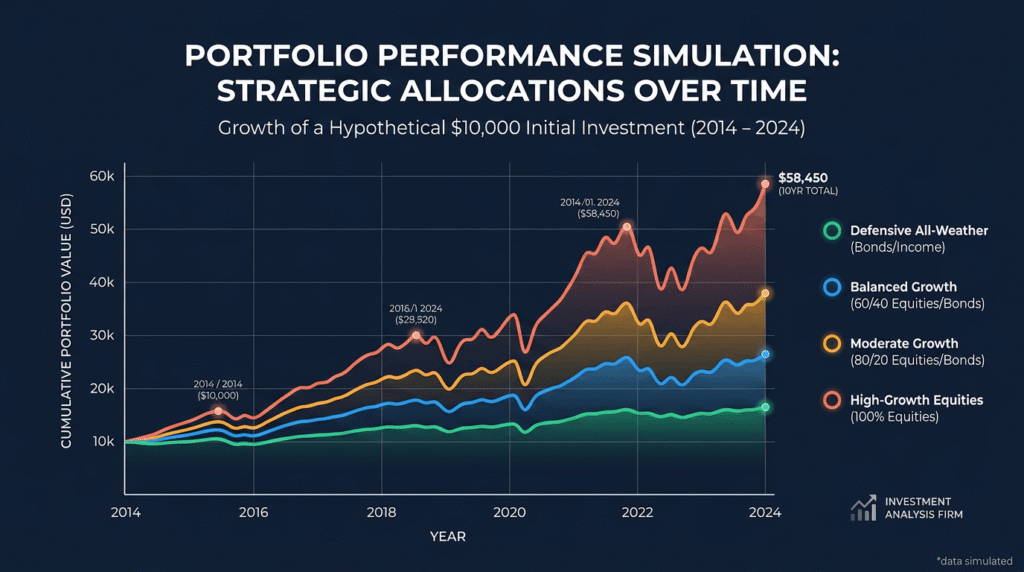
Your fixed monthly deposit automatically buys shares at a discount when prices fall. Your deposit buys fewer, more expensive shares as prices rise. This mechanical approach eliminates emotional decision-making and ensures you buy throughout the economic cycle.
6: Think long.
Emotional discipline is the key to investing success. Stock markets have healthy cycles with short-term corrections and bear markets.
- Avoid Emotional Liquidations: Every historic downturn has seen major market indexes rise to new highs. Selling assets in panic when prices fall locks in losses.
- Automate Your Portfolio: You have to set up payday deposits from your checking account to your brokerage account. And keep humans out of the loop, protect your portfolio from your psychology, and let compounding happen.
[Broker A] vs [Broker B], Best online stock brokers for beginners
You need an investment platform account to buy these assets. Your provider choice depends on your level of daily decision-making.
There are two options available for investing for beginners.
Option A (Robo-Advisors)
Robo Advisors let you answer a few questions about your goals and have an algorithm build and rebalance a diversified portfolio.
Where to invest for wealthfront improvement
Auto-reinvestment, guardrails against emotional trading, hands-off.
Cons: Its annual management fee is about 0.25% of your account balance.
Option B: DIY (discount brokerages)
If you want full control over your investments, to choose your own ETFs, and to avoid management fees, use a traditional online broker.
Robinhood, Fidelity, Vanguard, and Charles Schwab best platforms.
The good: fractional shares, tax-advantaged retirement accounts, and zero stock and ETF commissions.
Cons: You must log in, trade, and allocate yourself.
How to Open and Fund Your First Trading Account
Are you ready for your first investment? Use this step-by-step launch sequence to simplify the setup for Investing for Basics.
1. Choose Your Account Type:
Needs ID verification info.
First of all, choose a Tax-Advantaged Retirement Account (like a Roth IRA), where your investments grow tax-free, or a Standard Taxable Brokerage Account, which has no tax benefits.
But lets you withdraw cash anytime without penalties. Long-term beginners should consider a Roth IRA.
2. Open Broking Account:
Duration: 5-10 minutes.
Foatthat go to Fidelity or Robinhood and click Open an Account.
According to federal financial regulations, you must provide your SSN or tax ID, address, and ID photo.
3. Link your bank account:
Needs: Account and routing numbers
Connect your checking account securely using Plaid. Then start the engine with a $10 or $50 seed fund.
4. Buy it:
Critical Step: Do not let cash idle.
Finally, depositing money in a brokerage account is not investing it. An idle settlement fund awaits your purchase.
Find a total stock market index ETF (VOO, IVV, VTI are good starters). Enter your desired dollar amount. After that, choose Market Order. Congratulations, you now have market share.
FAQs
- How much money do I need to start investing?You can start with 1 USD to 5 USD at the beginning.
- What is the difference between a Stock and an ETF?A stock is one share in a company, while an ETF is a kind of mutual fund
- How much can I contribute to a Roth IRA?IRA contribution limits: $7,500 ($8,600 if 50 or older) or your taxable income for the year.
- Is my money safe in an online brokerage account?Yes, your money will be safe in an online brokerage account and will be heavily protected.
- When should I sell my investments?You can sell your investment if the company's fundamentals deteriorate. Watch for an acquisition of a company, especially one that is purchased for cash.