
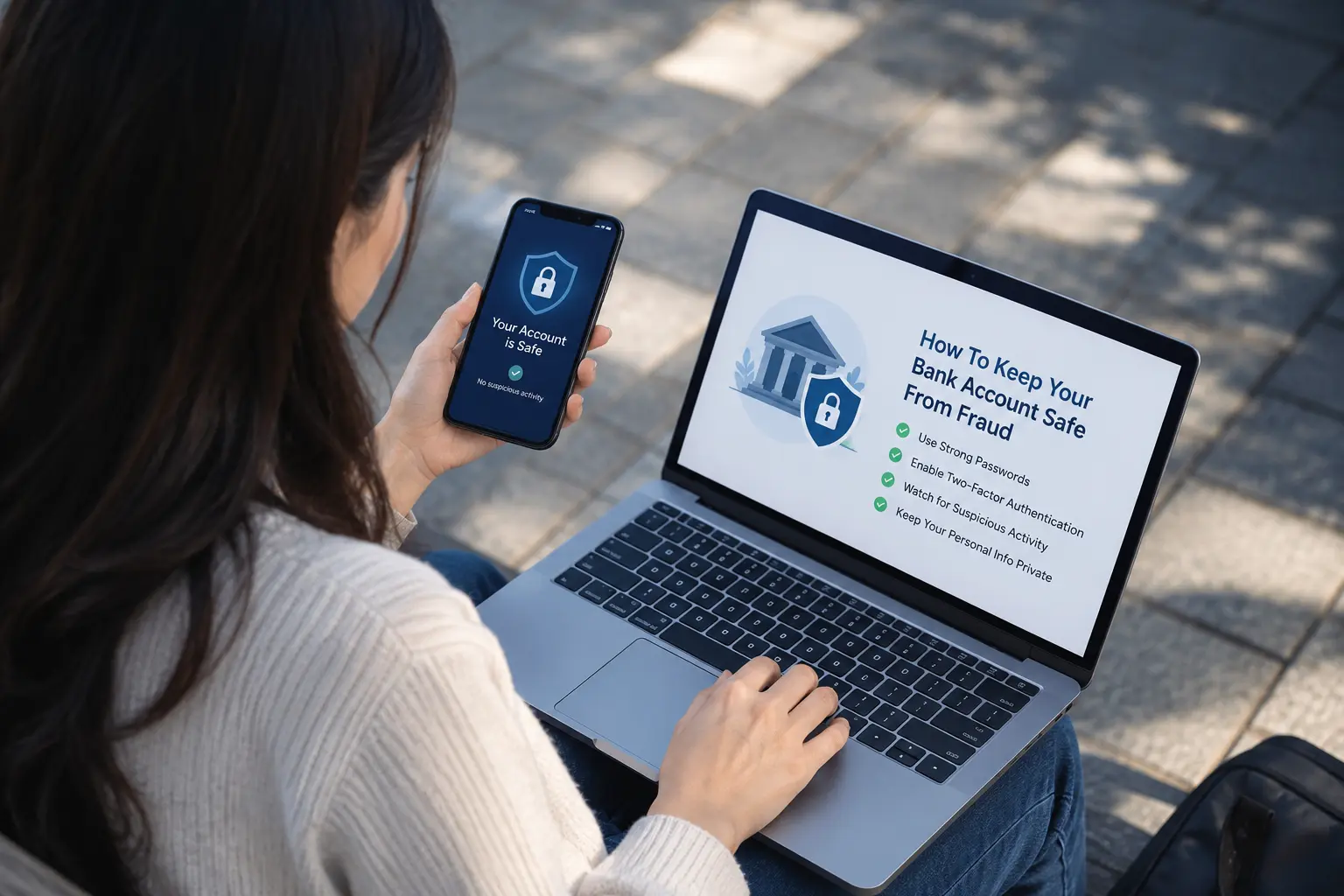
Thanks to the development of technology, people have become accustomed to convenient online and mobile banking. Unfortunately, there are some risks of using them, and these risks have increased lately since banking fraud cases are becoming more and more sophisticated and numerous.
Nowadays, taking the necessary actions to prevent your bank account from any kind of fraudulent activity is mandatory. This article is written to help readers find some tips on how to protect themselves and their finances with the help of research.
Lets begin the article where I will guide you on how to increase your bank account security.
Understanding Bank Fraud
It is important to start with understanding your opponent if you want to protect your savings. There are several terms that will help you identify this phenomenon better.
Definition of Bank Fraud
Bank fraud refers to the use of potentially illegal means to get any property, assets, or money owned or held by a financial institution or by depositors who are fraudulently represented to be a financial institution.
This kind of crime is also called a white-collar crime, as it is committed through deception. With the help of bank fraud, the attackers use your information to commit such crimes as opening a new loan in your name, transferring funds from your account, or forging your check.
Common Types of Online Banking Fraud
The attackers come up with various ways to trick both clients and banks. You should stay aware of this ever-changing area of criminal activity in order to prevent yourself from any trouble.
Here are some common types of banking fraud.
- Identity Theft: Identity theft is the act of opening a new bank account or taking control of an existing one by stealing personal information, such as your date of birth or Social Security number.
- Phishing: Phishing is the practice of posing as a bank and sending a customer an email, text message (smishing), or phone call (vishing) in an attempt to get them to divulge their login information or click on links.
- Not-Present Card (CNP): Fraud is the use of your card information (CVV, expiration date, and 16-digit number) to make unlawful purchases without using the actual card. This data is typically traded on the dark web following a significant data breach.
- Account Takeover (ATO): the type of identity theft when an attacker succeeds in getting access to the bank account and changes the credentials.
Statistics on Bank Fraud
Some recent data show the current state of affairs with digital fraud.
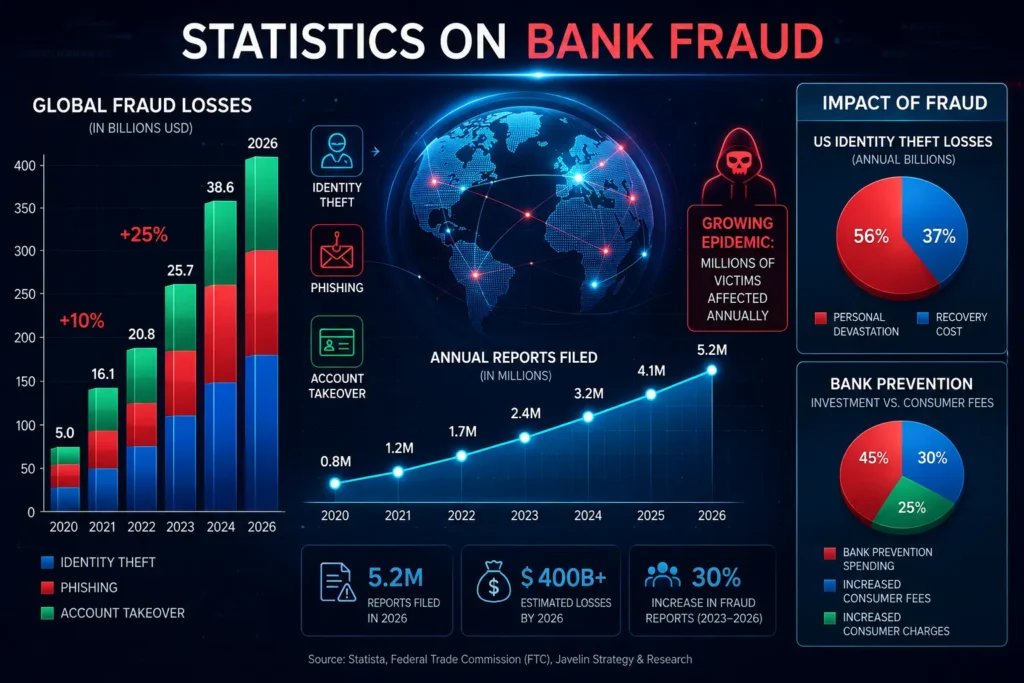
Recent Stats Show the Rise in Fraud. The recent industry data depicts quite a terrifying image of the digital warfare arena. The threat is not abstract and theoretical; on the contrary, it exists and grows into the increasing worldwide pandemic affecting millions of victims each year.
Recent Stats on the Growth in the Number of Fraudulent Cases
Globally, the number of losses due to fraud is absolutely shocking. Organizations that prevent fraud, such as the Federal Trade Commission (FTC), report year-to-year increases in both total sum lost due to scams and the total number of reports.
Impact of Fraud:
The early 2020s saw a sharp rise in identity theft damages in the United States alone and reaching billions annually.
Besides, these statistics do not include emotional damage and the considerable efforts required to restore identity. Banks, in turn, invest greatly in the prevention of fraud, which translates into additional fees charged to consumers.
How to Protect Your Bank Account
Protecting your financial assets from criminals is not easy, but it requires a certain combination of sophisticated technologies and diligence on your part. Using the right techniques, you can construct an effective barrier for your finances. Below, you will find several vital safety tips that should be followed to enhance bank account protection.
Use Strong Passwords
A password is the main gate to your financial digital vault. One common and simple password used on multiple sites is a gift for a hacker, since they use automation software capable of trying thousands of possible combinations each second.
Use Complex Passwords:
Instead of using simple passwords such as password or Passw0rd1 and create long passwords. And that contains a combination of uppercase and lowercase characters plus digits and other special characters. Phrase CorrectHorseBatteryStaple is stronger than simple Passw0rd1.
Manage Passwords Properly
Reuse of any password is strictly prohibited. Here comes the role of modern technologies. You may generate, save, and utilise strong, one-of-a-kind passwords on all financial websites by using one of the top password managers for banking, like Bitwarden or 1Password.
Turn on two factor authentication (2FA)
Even though password cracking software has a lot of power, it stops when it sees Two Factor Authentication (2FA). Even if a malevolent person were to obtain your password you would still be unable to gain access thanks to this one feature that adds an additional layer of security.
What is 2FA?
Before you can log in, you must present two pieces of identification. The first is something you know (your password), while the second is something you have (a physical security key, an authenticator app, or a dynamic code supplied to your smartphone via SMS).
Turn on 2FA right away.
Go to the Security or Settings tab in your online or mobile banking app to activate two-factor authentication. To add your phone number or connect an authenticator app, follow the instructions. Because of its great efficacy, this step is emphasised above all others in many banking safety tips.
Keep a Regular Check on Your Accounts
Why consistent monitoring is crucial
Reviewing your behaviour should not wait for a monthly paper statement. If you develop a regular monitoring routine, fraud can be identified fast. In order to minimise financial harm, early discovery is essential.
Tracking Transactions
Examine transactions every day using the official mobile app for your bank. Before making a big purchase, attackers frequently “test” a stolen account with a few modest, inconspicuous transactions (like $1.99). Being vigilant enables you to recognise these minor warning signs before the catastrophe occurs.
Watch Out for Phishing Scams
Attackers frequently attempt to attack “you” through social engineering rather than actually hacking your account. One of the main ways that banking fraud is delivered is through phishing.
Typical Phishing Techniques:
A phishing email may contain an odd link, a generic greeting (“Dear Valued Customer”), and urgent language (“Your account has been suspended!”). “Your card has been blocked” is one example of a smishing (SMS) attack. To confirm your identification, click this link.
Recognise Attempts:
Sensitive login credentials (passwords, 2FA codes, or PINS) are never requested by reputable banks via text or email. Never click on an odd link to confirm a communication. Alternatively, go to your bank’s official website on your own or give the reliable number on the back of your actual card a call.
Make use of secure networks
Just as important as how you bank is where you bank. It’s like conducting your banking in a public library while everyone is looking, if you use an unprotected network.
Public Wi-Fi Risks:
Your digital data is sent over the air when you connect to public Wi-Fi, like that found at coffee shops, airports, and hotels. Basic tools can be used by a hacker on the same network to “sniff” traffic and obtain your private login information. One of the main risk factors for compromised bank account security is public Wi-Fi.
Banking Safety Tips:
Always use a secure, encrypted home network when conducting online banking. Turn off Wi-Fi and use the 4G or 5G cellular internet connection on your smartphone if you have to bank while on the go. Use a Virtual Private Network (VPN) on all devices for an additional degree of anonymity.
Indications of a Hacked Bank Account
Sometimes a breach happens in spite of your best efforts. To guarantee minimal damage and a quick recovery, you need to know what to look for.
- Unauthorised Activity: No matter how minor, a charge or withdrawal that you did not authorise is the most clear indication that your bank account has been hacked.
- Contact Information Changes: In order to prevent you from getting fraud alerts, your attacker may frequently alter the related phone number, email address, or mailing address if they are successful in taking over.
- Login Failure: Your password may have been altered during an account takeover if you are suddenly unable to access your mobile app even though you are using the proper one.
If you need guidance to protect your bank account, the Finance Nest Blog can help you out. It is a professional and experienced educational platform.
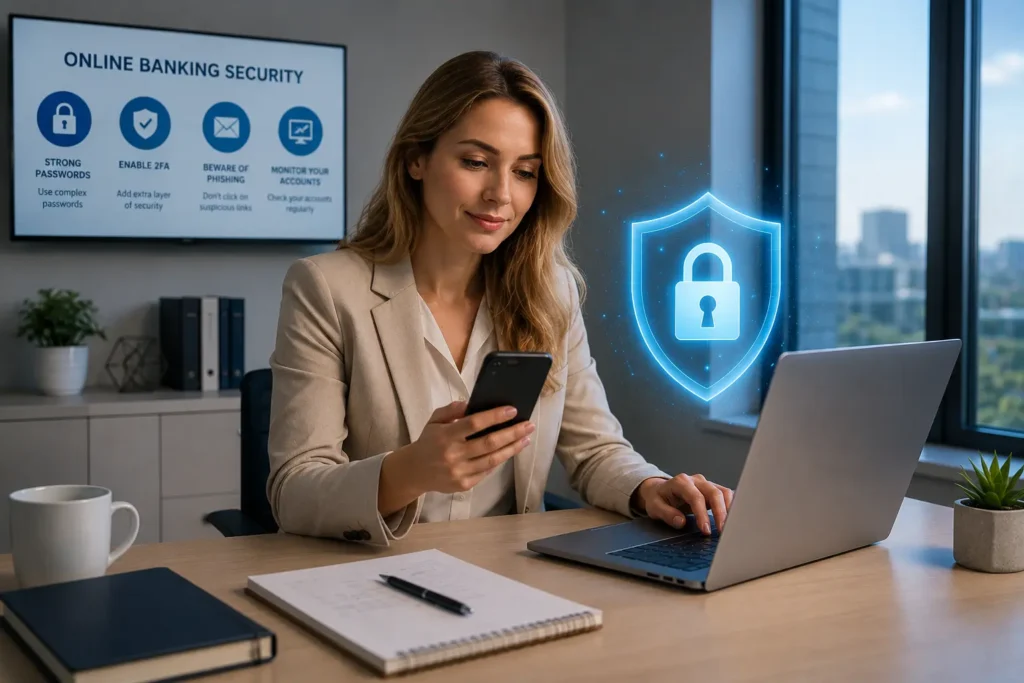
How to Handle Being a Fraud Victim
Speed is your friend if you think you may have been a victim. Although there isn’t much time to undo certain fraudulent transactions, you can get your money and identity back if you act quickly.
The most critical step is to freeze your bank account because of fraud. Make a quick call to the fraud hotline at your bank. Give them instructions to freeze the fraudulent bank account in order to stop any more unauthorised payments or charges. It might be necessary for you to create a new account.
- Report the fraud: To record the incident, submit an official report to your bank. Additionally, you need to register a complaint with both your local police station and the FTC (identitytheft.gov). In order to contest charges and undo losses, this official paperwork is frequently necessary.
- Protect Other Accounts: Change the passwords on your email, social media, and other financial accounts (such as credit cards and investment accounts) and turn on two-factor authentication (2FA) because hackers frequently reuse data. To easily create fresh, distinctive credentials, use your password manager.
- Monitor Your Credit: To stop new accounts from being started in your name, place a “fraud alert” or “credit freeze” on your reports with the three main credit bureaus (Equifax, Experian, and TransUnion).
Top Antivirus Programs for Internet Banking
All of your devices, including smartphones, must have strong security software installed in order to use a layered defence. This program has the ability to identify malware and stop phishing attempts before they happen.
Software Options:
Choose a security suite with a specific Safe Banking or Secure Browser function. Your credentials are shielded from keyloggers and other spyware by these specialised browsers, which are isolated environments.
Using one of the top antivirus programs for online banking (like Bitdefender or Norton) is an essential part of a proactive defence plan, even though no product is flawless.
Winding it Up
Although fraud is a growing global concern, there is still hope. In actuality, following fundamental bank account security guidelines can prevent the majority of cybercrime. You may build an efficient, comprehensive defence around your financial life by selecting strong passwords, turning on Two-Factor Authentication, and being on the lookout for phishing.
The security of your bank account is a continuous obligation rather than a one-time setup. Be proactive, keep yourself informed, and prevent thieves from stealing your hard-earned money.
FAQs
- Is protection from all online fraud guaranteed by my bank?No, banks provide strong but not perfect fraud protection. Regulation E provides safeguards against unauthorised electronic transfers in the United States, but you have to move fast.
- Can I avoid bank fraud with just antivirus software?Not at all. Strong antivirus software is essential banking safety tips, but it is unable to stop many prevalent types of fraud.
- How frequently should I keep an eye out for indications of fraud in my bank account?Every day, you should keep an eye on your bank account. This is made simple by contemporary banking apps. As part of your daily routine, take a moment to analyse your recent transaction history.
- What is a top password manager for banking, and what are its benefits?For all of your online accounts, password managers create, store, and automatically fill in strong, one-of-a-kind passwords. Because they address the widespread issue of password reuse, they are vital for bank account security.