Every freelancer runs into the same problem early on. Clients want proof of past work. But past work usually comes from clients first. So where does someone even start?
A portfolio works as the main sales pitch here. In fact, it shows skill and real ability. Often before a single chat even happens. So the good news matters a lot here. Paid clients aren’t actually needed to build a strong, professional portfolio from scratch.
This guide lays out real ways to build a freelance portfolio with no clients. One that still pulls in real work. So let’s get right into it.
How to Build a Portfolio When Starting With No Clients
Starting out with no paid work mostly needs one small shift in thinking. Instead of “here’s what I did before,” it becomes “here’s what I can do right now.”
Because clients care about one thing above all. Can this person solve my problem today? That question matters far more than whether someone got paid for similar work in the past.
Shift From a Resume to Proof of Work
A freelance portfolio works as proof of skill. Not a list of past job titles like a standard resume. So here’s how to build one from scratch.
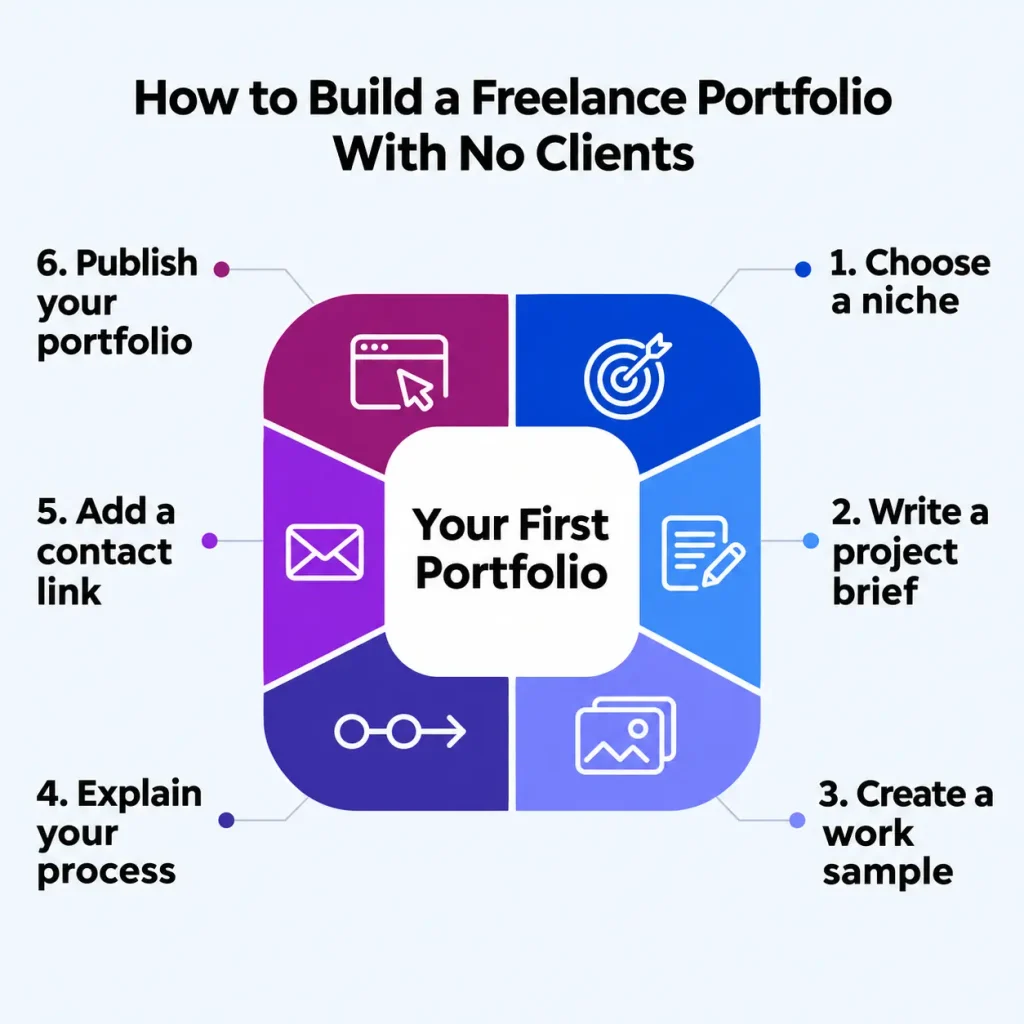
First, pick one clear area of focus. For example, WordPress design, email copywriting, logo design, whatever fits best. Then build a few samples inside that one niche. This helps future clients instantly see who the work is meant for.
Portfolio Samples for a Beginner Freelancer With No Experience
Building real, solid work samples stays the fastest way to earn trust. Even with zero paid history behind it.
Speculative Projects
A beginner freelancer can build sample work for made-up companies. Or for a personal brand. No client input or pay needed at all.
- For writers: Pick a company you genuinely like. Write three of their product pages or blog posts as if you were hired to do it.
- For designers: Redesign a local business’s messy homepage. Or a cluttered app screen. Then explain the thinking behind it in a short case study.
Pro Bono Work and Open-Source Help
Taking on one small free project for a nonprofit or charity works well too. For instance:
- For a nonprofit: Offer to update their site or write a newsletter for free. The real payoff comes as a testimonial and a solid case study.
- For an open-source project: Programmers can fix bugs on GitHub. Or write docs. Either one turns into a real work sample fast.
A Real-World Example of This Strategy in Action
One new UX designer, with zero paid clients yet, picked a messy local restaurant app. Then redesigned the full user flow from scratch. That redesign became a simple three-step case study, walking through the thinking behind each choice.
A small agency spotted that case study on LinkedIn. That single post led straight to a paid project. This kind of result happens more often than most beginners think. Since one strong, detailed example often beats a long client list anyway.
What to Include in a Beginner Freelancer Portfolio
A few well-done, detailed samples beat many thin, weak ones every time. So quality matters far more than count here.
A solid beginner portfolio usually holds these parts:
- Project basics – the project name and firm involved, clearly marked as a spec or concept piece
- A short process summary – research, planning, and the actual work, briefly explained
- Strong visuals or clean text – whichever fits the type of work
- A clear call to action – something that pushes future clients to actually reach out
The Best Portfolio Website Builders
The right builder depends a lot on skill level, budget, and the type of work on show. So consider these options:
- Squarespace – clean, simple, pre-made templates, works well for writers and creators
- Webflow – more control and interactive parts, fits designers and developers
- WordPress.org – the most flexible pick overall, great for blogs, SEO, and deep tweaks
- Wix – simple, drag-and-drop, easy for total beginners to pick up fast
The Best Portfolio Hosting Platforms
For anyone not ready to build a full site yet, a few platforms allow direct uploads. And tap into a built-in client base too.
- Design and animation: Behance, Dribbble, Adobe Portfolio
- Writers: Medium, Substack, Journo Portfolio
- Developers: GitHub, GitLab, CodePen
- Video and photo: Vimeo, YouTube, SmugMug
Freelance Portfolio Examples for Beginners
Building freelance portfolio examples with no clients really comes down to two steps. Buy a domain name, then sign up with a website builder. So that’s genuinely most of it.
Getting a Freelance Portfolio Domain
Before offering any service, buying a custom domain (like YourName.com) becomes one of the first real steps.
A personal domain signals real intent. In fact, short, easy-to-recall names tend to work best. Often a name paired with a field. In most cases, .com and .co extensions build more trust with visitors than odd ones.
A few solid domain sites worth a look:
- Namecheap
- Google Domains (now under Squarespace Domains)
- Cloudflare
For anyone looking to explore other ways to earn online, the Finance Nest Blog covers plenty of ground. Affiliate marketing, digital products, rental income, dividend stocks, and more all get broken down there in plain terms.
Registering a Portfolio Builder
Once a domain gets locked in, the next step means picking a site builder and a fitting template.
The first few steps usually mean linking that custom domain through DNS settings. Then adding three to five strong, real samples right away.
Common Mistakes Beginners Make With Portfolio Building
A few patterns trip up new freelancers again and again when building a portfolio from zero:
- Adding too many thin, low-effort samples instead of a few strong ones
- Skipping the process explanation, showing only the final result
- Picking a niche too broad to feel focused or clear
- Forgetting a clear call to action at the end of each project
None of these slips come from a lack of skill exactly. Building a portfolio with no client past just takes a slightly different path than most beginners expect at first.
Key Takeaways
- Learning how to build a freelance portfolio with no clients mostly comes down to making real, well-shown samples instead of waiting for paid work first
- A beginner freelancer gains far more from three to five detailed projects than a long list of thin, weak ones
- Freelance portfolio examples built through spec work or pro bono jobs often carry just as much weight as paid client work
- A custom domain and a clear niche help a portfolio feel professional and focused from day one
- Case studies that explain the process, not just the final result, tend to build trust faster with future clients
Conclusion
Building a real, useful freelance portfolio with no clients stays fully doable. Design work pieces that show real thinking. Then place that work on a clean, sharp page built to draw in new clients.
So there’s no real reason to wait. Starting today puts that first paid project a lot closer.
FAQs
- Should portfolio samples get labeled as concepts if there's no real client behind them?Being upfront works best here. So labeling a piece as a "Concept Project" or "Redesign Concept" reads as honest. And most clients respect that far more than an inflated, misleading portfolio.
- How many projects should a beginner portfolio hold?It depends on how deep each case study runs. But three to five strong projects, with one deeper case study, usually hits the right balance. So too few looks thin, and too many can feel padded out.
- Is a website better than a PDF portfolio?Both work. But a custom site with its own domain tends to look more professional. In fact, it also builds a stronger personal brand and gets found more easily by clients searching online.
- How can testimonials happen with no paid clients yet?Charity work often gives a natural first testimonial. So do small jobs for friends or local shops. Asking past managers or coworkers for a character reference can fill the gap just as well.
- How long does it usually take to build a portfolio from scratch?A focused week or two often works for three to five solid samples. Instead of rushing, taking a bit of extra time tends to protect quality far better.
- Should a beginner portfolio include projects outside their main niche?Not really. Because a few unrelated pieces can dilute the message. So staying focused on one clear niche helps potential clients understand exactly what they're hiring for.
- Is it okay to update or replace old portfolio samples later?Yes, and it's actually encouraged. So swapping out weaker or outdated pieces for stronger, paid work over time keeps a portfolio feeling current and credible.