Introduction
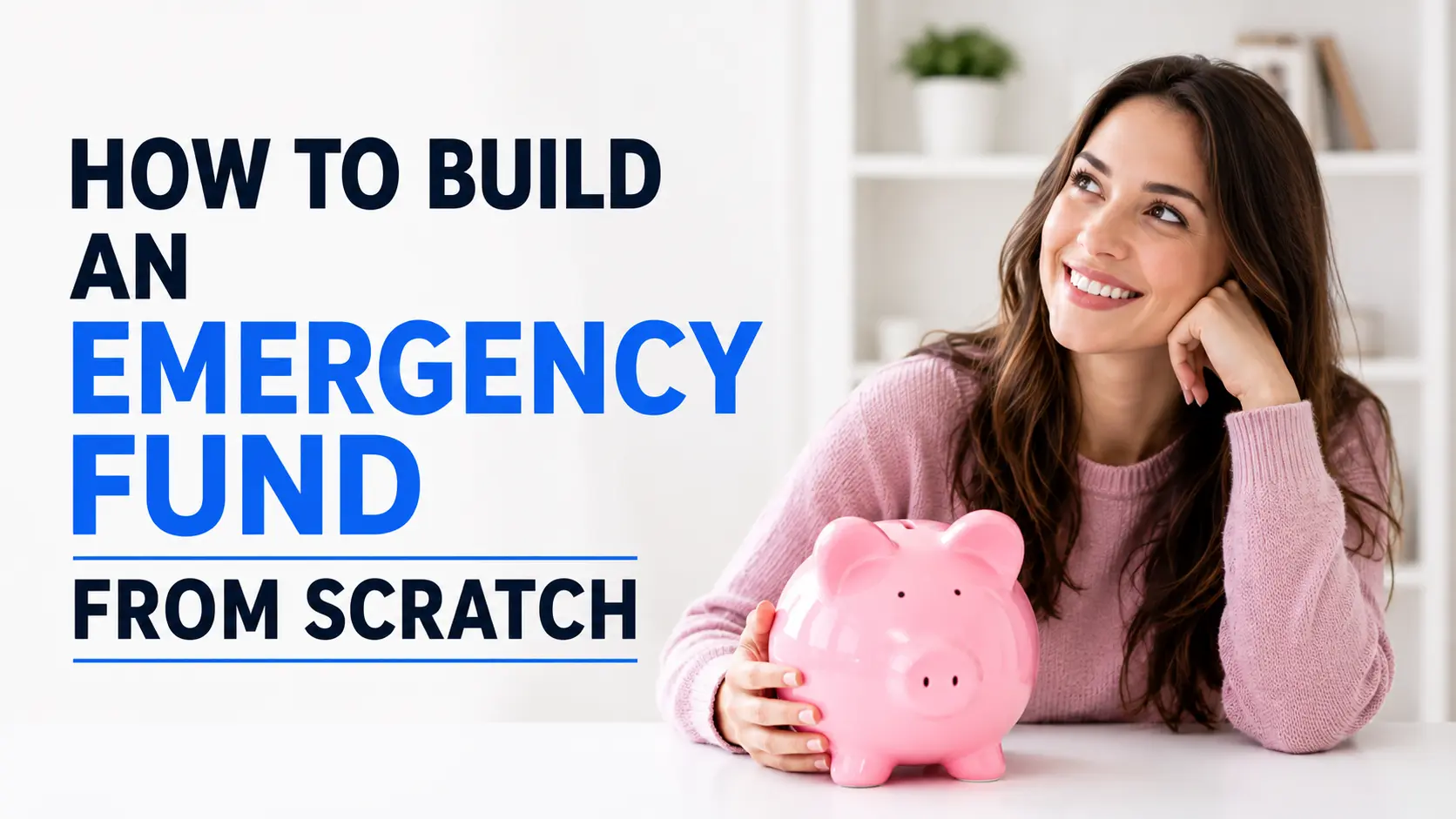
An emergency fund is a financial reserve that is stashed away and distinct from your everyday expenditure to be used in the event of unanticipated expenses.
Building this safety net is important to sustaining financial security when something unexpected happens. Such as a sudden job loss with essential medical treatment or costly car repairs.
In the absence of those reserves many people turn to high-interest credit cards. And making it very hard to stop debt from mounting up in a crisis.
At the end of the day simply having a financial buffer can bring priceless peace of mind and minimize stress, allowing you to face life inevitable surprises with confidence.
Making this first step to create this baseline is the most powerful choice you can make to protect your household and ensure your long-term security.
Why do I Need Emergency Savings?
It is like driving a car without insurance. You know that it’s not a question of if but when an unexpected breakdown would happen when you have no financial buffer.
Today economy can throw up all sorts of unexpected financial curveballs. So, think inflation-driven pricing surges or companies suddenly reshaping their entire structure.
When life events happen, being able to access funds immediately can be the difference between a little annoyance and a full-blown financial disaster.
Key Reasons
An emergency fund that is a liquid, or easily accessible, asset is a personal finance safety net that keeps your household from falling into the destructive cycle of high-interest credit card debt or predatory personal loans.
When a medical emergency or a house emergency pops up, a cash cushion helps you to absorb the hit right away. You pay the bill, fix the problem, and get on with your day-to-day life without derailing your long-term financial ambitions.
Also, a dedicated cash reserve brings tremendous psychological benefits. Having enough to pay several months’ worth of bills without your main source of income takes away the everyday stress of job insecurity.
It gives you the breathing room to bargain, pivot, or look for better prospects with complete peace of mind, allowing you to make professional decisions based on growth instead of survival. Learning how to build an emergency budget is the first step in any personal finance plan.
How much do I need in an Emergency Fund?
The amount of your safety net is based solely on your personal cash flow, job security, and monthly liabilities. The majority of financial experts recommend saving enough to cover three to six months of essential living costs.
But you may tailor the aim using a computerized emergency fund calculator to reflect your household’s specific risk profile.
Use this mathematical formulation to compute your specific target baseline:
$$T_{savings} = M_{fixed} * N_{month}$$
Where:
- $T_{savings}$ is your goal for savings
- $M_{fixed}$ is your fixed monthly expenses (rent, utilities, groceries, insurance, debt minimums).
- $N_{months}$ is your target survival horizon (months)
Household Risk Profile Target Savings Allocations
- RISK PROFILE N (MONTHS) M_FIXED EXAMPLE TARGET GOAL ($)
- Dual-Income/Stable 3 Months $3,500 $10,500
- Single-Income/Fixed 6 Months $4,000 $24,000
- Freelancer/Variable 9 Months $3,000 $27,000
Three months is generally enough if you have paying work with good job security. But if you are a freelancer, a commission-based salesperson, or the only provider for a large family, planning for six to nine months of non-negotiable living costs is a far safer bet.
With an emergency fund calculator, you can determine this exact sum and be sure you are not mindlessly saving.
It gives you a specific and attainable milestone to monitor, turning a daunting financial objective into a series of automated and manageable actions.
If you need financial guidance, connect with a Finance Nest Blog. The brand owns a team of specialist financial advisors who can offer you the right guidance.
Emergency Fund / Savings Account
A confusing aspect for newbies is where to keep their safety reserves. Storing your emergency funds in a regular checking account is a formula for failure because it combines your survival reserves with the money you use to pay your bills, and you wind up accidentally leaking money out of it.
On the other hand, leaving it in a typical physical and mortar savings account is also very inefficient. The national average for savings interest is a measly 0.38% APY. Every single day, your money is actively losing purchasing power to inflation.
To do this, you will need to keep your reserves in a dedicated High-Yield Savings Account (HYSA). These accounts provide interest rates that are sometimes 10 times that of typical banking institutions, often over 4.00% APY.
An HYSA keeps your cash fully separate, so it’s quite liquid and available to you while it is compounding in the background. The key to building a secure and inflation-proof emergency fund is to understand the structural variations between these vehicles.
Best Apps for Budgeting
To move to an automated saving practice, you need the correct digital tools to help you manage your cash flow, uncover structural gaps, and redirect surplus income toward your goals.
1. YNAB (You Need A Budget):
Best for active cash allocation with a zero-based budgeting strategy. It’s a super simple way to acquire extra cash for your safety reserves, because it pushes you to give every dollar a task before it leaves your wallet.
2. Monarch Money
A sleek and visual dashboard that syncs all your checking, savings and investment accounts in real-time. It lets you build up visible savings progress bars and easily track your growing net worth.
3.Empower
Another great free option that concentrates on investment management and retirement planning, but still provides simple, automated tracking of your monthly cash flow indicators.
Compare CD Rates for Rainy Day Funds
For investors who already have a cash reserve, Certificates of Deposit (CDs) are a safe way to lock in competitive, guaranteed interest yields.
CDs do not give you the instant, same-day liquidity of a high-yield savings account, but they are a good way to stash some of your bigger safety net.
Here is a look at the best CD rates for July 2026 and how they compare to:
Compare CD Rates July 2026 – Rivals
- Organization
- Length of Term
- APY Rate (%)
- Minimum deposit to start an account
- Direct Popular
- 1 Year 2 Year 3 Year 5 Year 7 Year 10 Year 20 Year
- 4.15% APY $10,000
- ETrade
- 1 Year
- 4.10% APY 0
- Limelight Bank
- 1 Yr
- APY 4.10% $1,000
- Bread Savings
- 1 Year
- 4.00% APY $1,500.00
1-Year CD (Top Yields up to 4.15%):
Locking your money into a 1-year CD ensures you a return that beats current inflation. This makes it a great vehicle to hold the “second half” of a six-month emergency fund.
2. CD Laddering Strategy:
To keep your money liquid, you can divide your savings into many pieces and acquire 3-month, 6-month, 9-month, and 12-month CDs that roll over. This orderly process means that every 90 days a piece of your money matures and is available to you.
How to Open a High-Return Savings Account Online
The online banks of today have a 100% digital onboarding process that takes less than ten minutes to complete.
Choosing a best-in-class, no-fee online institution instantly removes the human friction from your wealth-building habit.
Through this systematic approach, you can open your account.
[ Visit Bank’s Official Site ] ──► [ Provide Identity & SSN ] ──► [ Connect Checking Account ] ──► [ Schedule Recurring ACH Sweeps ]
Once you have your checking account linked via safe ACH, establish an automated repeating transfer to occur in the morning when your paycheck is deposited.
Automating your transfers guarantees that your safety net expands quietly and reliably without requiring any continuous willpower.
Winding it UP
Building a secure financial cushion with an emergency fund does not happen quickly, but taking persistent, thoughtful efforts secures your protection.
By understanding your financial flow, utilizing automated banking systems, and picking high-yield accounts, you insulate your household against unanticipated economic fluctuations.
Stay committed to your savings goals, review your progress often, and let compound interest ensure your everlasting financial freedom starting right now.
FAQs
- Is my money safe in an online high-yield savings account?Yes. Your deposits are federally protected up to $250,000 per depositor, as long as the online institution is guaranteed by the Federal Deposit Insurance Corporation (FDIC) or the National Credit Union Administration (NCUA).
- Should I pay down credit card debt before developing an emergency fund?It’s smart to put aside a “starter” reserve of $1,000 first, so you won’t have to go into new debt when minor situations strike. Once you have that first cushion, use any more to pay down debt with high interest rates first.
- Can I take money out of a CD in a real emergency?Yes, however you’ll usually pay an early withdrawal penalty which is often many months of interest. For this reason, retain at least one month's worth of spending in a liquid HYSA before locking up funds in CDs.
- How often should I examine my safety reserve size?Have your savings goals reviewed annually or anytime you experience a major life event such as a salary raise, a new mortgage, a career change or an increase in your household size.